How Slip Rings Transform Rotating Electrical Connectors for Modern Machines
Understanding Slip Rings and Their Role in Rotating Electrical Connectors
What are Slip Rings?
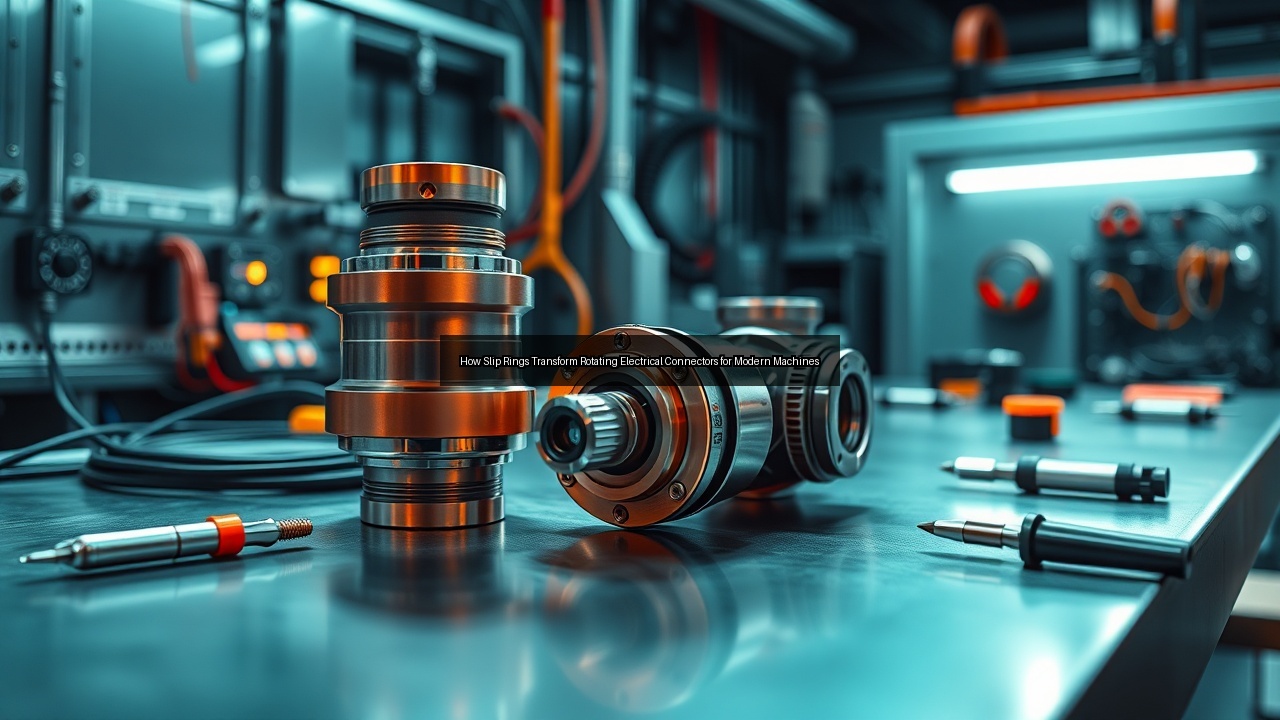
Slip rings serve as essential components that enable continuous electrical transmission across rotating interfaces. Engineers rely on these devices to maintain power and signal flow without interrupting motion in machinery that spins or turns repeatedly. A rotating electrical connector built around slip rings avoids the twisting and breakage common in fixed wiring setups. Manufacturers craft slip rings from conductive materials like gold, silver, or copper alloys to ensure low resistance and long service life. These units come in compact sizes for tight spaces or larger assemblies for heavy equipment. Industries value slip rings because they support reliable operation in demanding environments where vibration and temperature swings occur daily.
How Slip Rings Function in Electrical Connectors
Slip rings operate by using stationary brushes that press against rotating rings to create a consistent electrical path. Current travels through the brushes into the rings and onward to connected components without cables wrapping around themselves. This rotary electrical contact design handles both power delivery and data signals at varying speeds. Engineers integrate slip rings into electrical connectors so that motors, sensors, and actuators receive uninterrupted supply even during full rotations. The mechanism reduces wear compared to traditional connectors that require frequent stops or flexible cables. Proper alignment and spring tension on the brushes keep contact stable across thousands of revolutions.
Advantages of Using Slip Rings in Modern Machines
Slip rings deliver clear benefits in machines that demand constant rotation. They eliminate cable fatigue and downtime caused by tangled wiring. Operators gain smoother performance because the rotating electrical connector maintains steady voltage levels without spikes or drops. Maintenance crews appreciate the modular design that allows quick replacement of worn rings or brushes. Machines equipped with slip rings achieve higher uptime and support complex movements in robotics and automation lines. The technology also scales easily from low-current signal lines to high-power applications, giving designers flexibility across multiple equipment types.
Types of Rotating Electrical Connectors
Overview of Rotary Electrical Contacts
Rotary electrical contacts form the core of any rotating electrical connector. These contacts transmit electricity between fixed and moving parts while permitting continuous 360-degree motion. Designers select contact materials based on current load, environmental exposure, and required lifespan. Gold plating often appears in low-noise applications because it resists oxidation and maintains clean signal paths. Larger contacts handle substantial amperage in industrial drives and generators. The overall assembly fits inside protective housings that guard against dust, moisture, and mechanical shock common on factory floors.
Different Types of Slip Rings
Slip rings appear in several configurations to match specific machine needs. Capsule models fit inside small devices such as cameras and medical scanners. Through-bore versions allow shafts or cables to pass through the center. Pancake styles suit flat mounting spaces where height remains limited. High-speed units incorporate special bearings and balanced rings to operate above 10,000 RPM without vibration. Each type supports different combinations of circuits, voltage ratings, and signal protocols. Custom versions combine power lines with Ethernet or fiber channels inside one housing.
Comparison of Rotary Connectors and Other Connectors
Rotary connectors outperform standard plug-and-socket connectors when rotation forms part of normal operation. Fixed connectors require stops or flexible leads that eventually fatigue. Slip ring assemblies inside rotating electrical connectors provide continuous contact without mechanical twisting. Compared with mercury-wetted alternatives, modern slip rings avoid toxic materials while delivering similar low-resistance performance. Wireless options eliminate physical contact entirely yet still face limitations in high-power or shielded environments. Engineers often choose slip rings for their proven durability, cost-effectiveness, and ability to carry mixed power and data lines simultaneously.
Applications of Slip Rings in Modern Technology
Industrial Machinery and Robotics
Industrial robots depend on slip rings to route power and control signals to rotating joints and end effectors. A rotating electrical connector keeps cables from wrapping during repetitive arm motions on assembly lines. Packaging machines use slip rings to drive rotating tables that fill and seal containers without interruption. CNC turntables incorporate rotary contacts so that sensors and coolant lines remain active while the table spins. These connectors reduce unplanned stops and extend cable life in 24-hour production settings. Maintenance teams report fewer connector failures when slip rings replace older cable management systems.
Aerospace and Defense Applications
Aircraft radar antennas and missile guidance systems rely on slip rings for stable high-voltage transmission during rapid rotation. Defense vehicles employ rotary electrical contacts to connect turrets and sensor pods without cable drag. Slip rings in these environments withstand extreme temperatures, vibration, and altitude changes. Engineers specify sealed housings and specialized plating to ensure consistent performance under combat conditions. The compact size of modern units allows integration into weight-sensitive platforms such as drones and satellites. Reliability testing confirms thousands of hours of operation before scheduled overhaul.
Medical Equipment Integration
CT scanners and MRI gantries use slip rings to deliver high voltage to rotating X-ray tubes and detectors. The rotating electrical connector maintains image quality by preventing signal noise from cable flexing. Surgical robots incorporate miniature slip rings inside articulated arms that must rotate freely during procedures. Linear taper potentiometers combined with slip rings provide precise position feedback in rehabilitation devices. Hospitals value the reduced maintenance and improved uptime these connectors bring to critical diagnostic equipment. Sterilizable housings protect internal contacts in operating room settings.
Design Considerations for Rotating Electrical Connectors
Choosing the Right Slip Ring for Your Application
Selection begins with defining current, voltage, speed, and environmental requirements. Engineers match circuit count and connector size to the available mounting space. High-voltage designs require larger insulation gaps and creepage distances. Low-noise applications call for precious-metal contacts and shielded wiring. Custom adapters allow integration with existing harnesses and control cabinets. Reviewing manufacturer torque and life-cycle data helps predict long-term reliability. Testing prototypes under actual load conditions confirms the chosen slip ring meets performance targets before full production.
Factors Influencing Speed and High Voltage Performance
Operating speed directly affects brush wear and heat generation inside slip rings. Higher RPM demands precision balancing and advanced bearing systems. High voltage requires careful selection of dielectric materials and ring spacing to prevent arcing. Engineers calculate surface velocity and current density to choose appropriate contact pressure. Cooling channels or forced-air designs sometimes appear in extreme cases. Proper grounding and shielding reduce electromagnetic interference when both power and sensitive signals share the same rotating electrical connector assembly.
Wiring and Adapter Solutions for Slip Rings
Correct wiring practices ensure maximum performance from any slip ring installation. Color-coded leads and labeled terminals speed assembly and troubleshooting. Adapters convert standard military or industrial connectors to the slip ring’s pinout without custom fabrication. Strain relief at entry points prevents vibration from damaging internal wiring. Cable management systems route harnesses away from moving parts to avoid abrasion. Documentation that includes pin assignments and torque specifications helps technicians perform field replacements quickly and correctly.
The Future of Rotating Electrical Connectors and Wireless Technology
Emerging Trends in Connector Technology
Connector technology continues to advance toward higher data rates and smaller footprints. New materials improve wear resistance while reducing electrical noise. Integrated sensors now monitor temperature and wear inside slip rings for predictive maintenance. Hybrid designs combine slip rings with fiber-optic channels to handle bandwidth-intensive applications. Standardization efforts aim to simplify interchangeability across different machine platforms. These developments expand the range of tasks that rotating electrical connectors can perform reliably.
Integrating Wireless Technology with Slip Rings
Wireless technology pairs with slip rings to offload high-speed data while the rings carry power and critical control signals. This hybrid approach reduces the number of physical contacts needed and extends overall system life. Engineers place wireless modules near the rotating section to minimize latency. Slip rings still provide the robust power path that wireless alone cannot deliver at high wattage levels. The combination proves especially useful in medical imaging and aerospace where both reliability and bandwidth matter.
The Impact of Trends on Connector Design
Market trends push designers toward modular slip ring platforms that accept future upgrades. Increased emphasis on energy efficiency favors low-resistance contacts and optimized wiring layouts. Wireless technology integration influences housing shapes and internal shielding requirements. Regulatory demands for electromagnetic compatibility drive better filtering inside rotating electrical connectors. Overall, these shifts result in connectors that deliver longer service intervals, higher performance, and easier adaptation to new machine architectures across industries.
See Also
- A Deep Dive into the Advantages of Using Rotating Connectors in Industrial Settings
- The Essential Guide to Choosing the Right Rotating Electrical Connector
- Unlocking the Power of Rotating Electrical Connectors for High Voltage Applications
- Understanding the Mechanics Behind Rotating Electrical Connectors
- Innovative Adapters for Seamless Integration of Rotating Electrical Connectors